

When businesses buy office chairs, it can be tempting to choose one model and roll it out across the entire workplace. It’s efficient and cohesive. You may even benefit from economies of scale.
The thing is, people don’t all sit or work the same way.
A chair that works well for someone in accounts, who spends long hours at a desk, might not be the right fit for a salesperson who’s constantly in and out of their seat. A chair that suits focused solo work may not be the best choice for creative collaboration.
This guide explains how different types of work can change your priorities when choosing the best office chair for your New Zealand workplace.
Why the type of work matters when choosing an office chair
The way we work places different demands on our bodies. Some roles naturally promote movement, encouraging regular posture changes and time spent on your feet throughout the day. But some roles are mostly spent sitting, and the more time you spend seated, the more important ergonomic support becomes.
Once you understand the demands of the role, it becomes much easier to choose an office chair that supports how you work.
The right chairs for the right job
Office chairs for long periods of focused desk work
Does your job involve sustained concentration? If you work in finance, data analysis, law, or administration, the answer is likely yes. These roles require you to sit still and focus, and you often find yourself seated for extended periods. And this can put serious physical demands on your body.
For this type of work, ergonomic chairs are the best option. They have features specifically designed to support your body over long stretches of sitting. This includes adjustable seat height and depth, lumbar support, and responsive backrests that adapt as your posture shifts throughout the day.
These chairs help reduce strain and support neutral alignment, rather than letting small discomforts build into bigger problems. And that makes it easier to stay comfortable and focus during long days at your desk.

The Buro Force chair features advanced ergonomic technology with Buro Dynamic Intelligence™, adapting to your body as you sit. No more fiddling with manual adjustments.
For environments where sitting time extends well beyond a standard workday, such as control rooms, emergency services, or 24-hour operations, standard ergonomic chairs may not be enough.
In these cases, 24/7-rated chairs are specifically designed for continuous use. Built with more robust materials and advanced ergonomic support, they’re made to withstand multiple users and extended hours without compromising comfort or performance.
Heavy-duty options like the Buro Maverick 24/7 controller chair are engineered for high-demand settings, offering enhanced durability and all-day support for shift-based teams.
Office chairs for active, posture-changing work
Some roles naturally involve frequent posture changes rather than static sitting. Think salespeople, healthcare professionals, or lab technicians - people who shift from one task to another fairly often. If this is you, traditional office chairs may not keep up with how often you move.
For this type of work, sit-stand and kneeling chairs and stools are a strong fit. They’re designed to support active sitting by opening the hip angle, encouraging upright posture, and making it easier to transition between sitting and standing.
Rather than locking your body into one fixed position, these chairs promote movement and variation, keeping you comfortable and supported throughout an active workday.
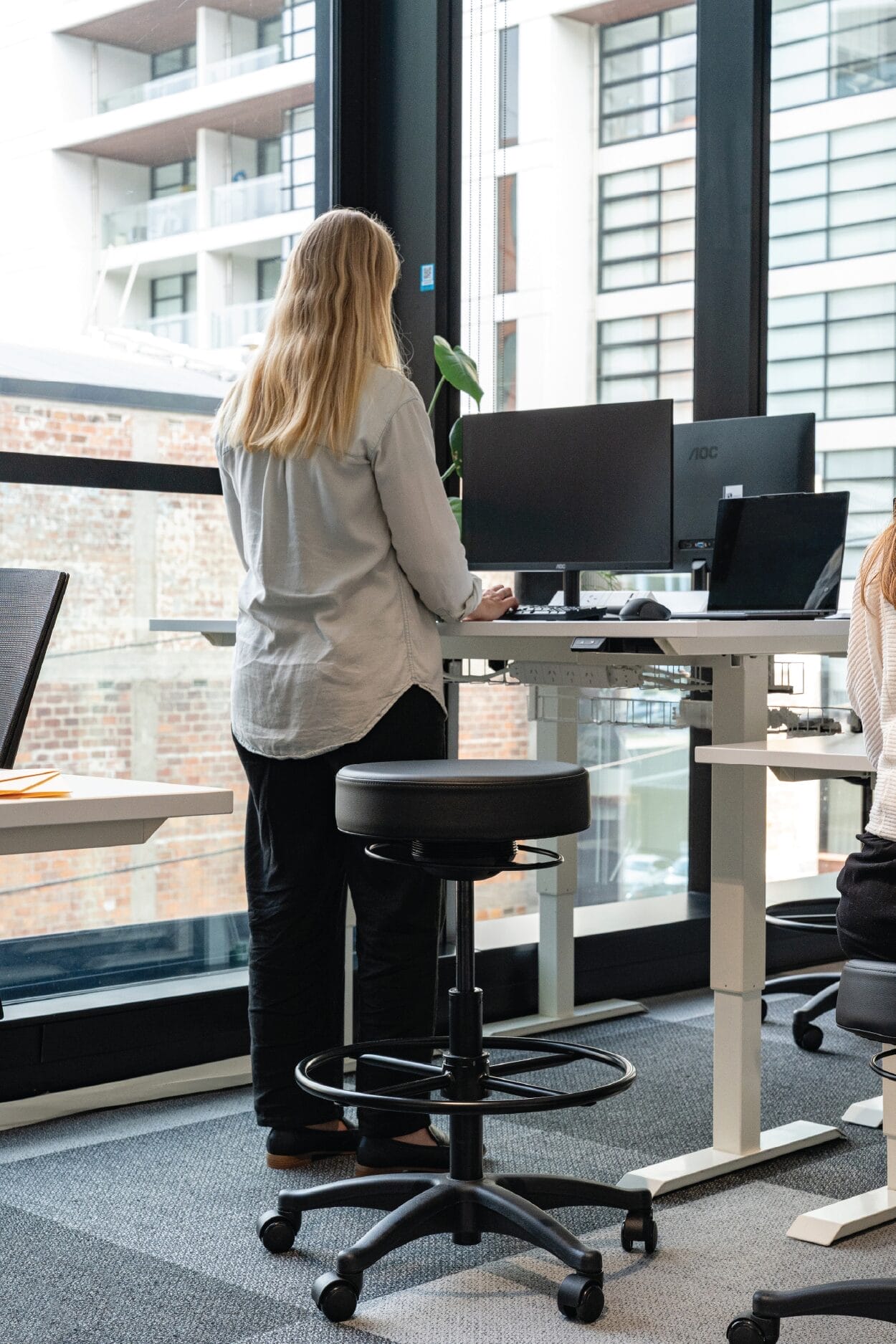
'Active sitting' stools like the Buro Polo are often recommended by physiotherapists to support better spine alignment.
Office chairs for creative and ideation-based work
Creative work is rarely static. If you’re a designer, marketer, architect, or creative professional, you probably move frequently between focused desk tasks, informal collaboration, and idea-sharing sessions. Comfort across these spaces comes from flexibility.
Soft seating plays an important role in creative environments.
Comfortable soft seating lets you relax into the space, encouraging casual conversations and collaborative thinking. Instead of being stuck in a rigid seated position, it gives you the freedom to change postures, which keeps the body moving and the creative juices flowing.

Konfurb Gem Ottomans create an informal meeting zone
Office chairs for meetings and client-facing spaces
If you have a client-facing role like a consultant, financial adviser, or account manager, your day probably involves a mix of desk work, meetings, and conversations. In these spaces, seating needs to balance comfort with presentation.
Meeting room chairs are used in meeting rooms, boardrooms. Designed for shorter periods of use, they have a stylish look that complements client discussions and formal meetings, without the bulk of an ergonomic chair.

The Buro Odyssey chair is designed to embrace you as you sit, this chair balances minimalist style with everyday comfort and looks great in meeting rooms.
Office chairs for coworking and hot-desking spaces
Shared workspaces like coworking areas, hot desks, and contractor stations come with a unique challenge, one chair needs to work for many different people throughout the day.
In these environments, ease of use becomes just as important as comfort. The quicker someone can sit down and feel supported, the less time is spent adjusting settings and the more time they can focus on their work.
Ergonomic chairs with synchronised mechanisms are a strong fit for these spaces. Designed to respond to the user’s movement, they allow the backrest and seat to adjust together naturally, reducing the need for constant manual fine-tuning.
With simple adjustments like seat height and seat depth, users can quickly find a comfortable position. From there, the chair adapts as they move, helping maintain support without interruption.

Chairs like the Buro Elan are designed for shared environments, offering intuitive adjustment and responsive support without the complexity of multiple controls.
What HR managers and procurement teams should look for
Choosing the best office chairs for your business is about more than individual comfort. It’s a balancing act of employee needs, consistency across teams, budget, and long-term value.
Instead of choosing one standard chair for the whole office, many organisations benefit from a role-based approach to seating. Start by thinking about the person using the chair, the type of work they do, and how their needs fit within the wider workspace.
Ask yourself:
- How much of the day are they sitting?
- How often do they move or change tasks?
- Does their role call for structure and support, or flexibility to move?
Then take a step back and look at the bigger picture:
- Will the chair be used by one person or shared?
- Can the chair be adjusted quickly and easily?
- Does the chair need to complement a client-facing space?
Once you’ve answered these questions, it becomes much easier to identify the right type of chair for different roles and ways of working. From there, you can compare features like adjustability, durability, and ease of maintenance to find the best fit for your team.
Choose office chairs that support how work really happens
It would be great if there were one best office chair for all office workers in New Zealand – but unfortunately, it’s not that simple! By choosing office chairs based on real work demands, you can create a healthier, more effective workplace.
To explore office chairs suited to your team’s way of working, connect with a Buro dealer for tailored advice and local support.


