

Think about the chair you're in right now. It swivels, rolls, tilts and shifts with you, and most of us never give it a second thought. That much comfort took nearly two hundred years to work out.
The story of the office chair is really the story of how we work, because every time the way we worked changed, the chair had to change with it. It's a good lens for where workplaces are heading, and it's where Buro's approach to innovation starts.
Before the office has a chair
People wanted a chair that moved with them long before offices existed. A Nuremberg manuscript from 1505 shows a rotating seat on castors, centuries before anyone had a desk job to use it at. The office chair only became necessary in the mid-1800s, when railways and growing businesses created a new kind of worker: someone who sat all day with paperwork.
Thomas Jefferson is often credited with an early swivel chair, said to have reworked a Windsor chair so he could turn between tasks while he drafted the Declaration of Independence in 1776. Later, the naturalist Charles Darwin put wheels on the chair in his study so he could scoot between specimens without getting up. Neither was a product. Both showed what desk work would soon ask for.
Swivels, castors and the machine age
The first chair you'd recognise today turned up in 1849. American inventor Thomas E. Warren patented the Centripetal Spring Chair, made by a New York firm that built sprung seating for railway carriages. It swivelled, tilted, rolled on castors and sat you on steel springs, and it pulled crowds at the 1851 Great Exhibition in London.
Victorian taste thought all that visible machinery was a bit vulgar, so it stayed a novelty. The idea didn't go away. As offices filled with clerks and typists through the late 1800s, makers started building chairs around how people actually sat at a desk, and height adjustment and mobility slowly became normal rather than remarkable.
When your chair showed your status
By the mid-1900s, your chair said something about your job. The corner office got the good one, and designers treated executive seating as a statement piece. In 1958, Charles and Ray Eames designed the Aluminium Group for Herman Miller, a slim, good-looking chair that still holds up nearly seventy years later. Seating back then was judged on how it looked and who sat in it. Comfort counted, but nobody was really studying how a body holds up over a long day at work. That came next.
How ergonomics changed the chair
A lot of ergonomic understanding came out of the Second World War, when working out how people fit machines improved everything from aircraft cockpits to factory floors. It reached the office in the 1970s. Herman Miller asked designer Bill Stumpf to study how people actually sit, and in 1976 his Ergon chair became one of the first built around the human body rather than a look.
The idea hit its stride in 1994 with the Aeron, designed by Stumpf and Don Chadwick. It dropped padding for breathable mesh and came in three sizes instead of one. It also moved with you as you shifted position throughout the workday. It's still the office chair most people can name, and you'll find it in the permanent collection at New York's Museum of Modern Art.
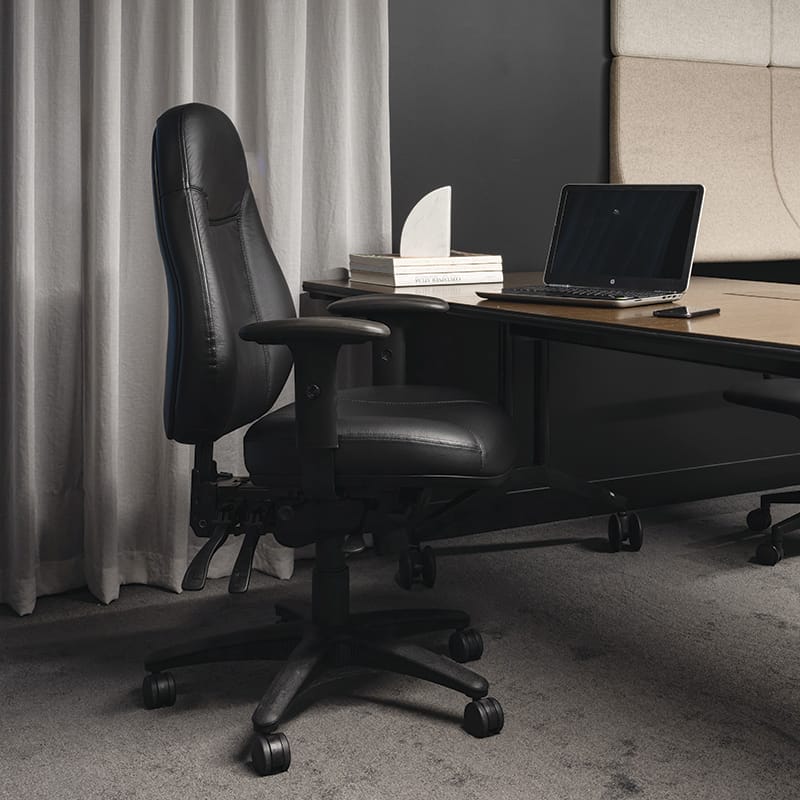
In 1995, our first product range included a version of the Buro Persona 24/7 chair. On occasions we see the original Buro Persona returned to Buro for reupholstery and then back to work some 20+ years later!
Smart seating and the self-adjusting chair
The same year the Aeron landed, a small company opened its doors in Auckland, set on making seating that suited the way Kiwis actually work. Over thirty years of office design and ergonomics, Buro has watched the task chair go from a three-lever mechanism you set by hand to one that sets itself.
The Buro Mentor is a good example. Its self-weighting mechanism responds to your body and your movement, with no levers to fiddle with. When several people share the same desk across a week, a chair that resets itself for each person quietly saves everyone a job nobody liked. That's the task chair grown up, doing on its own what used to take a manual and a few minutes.
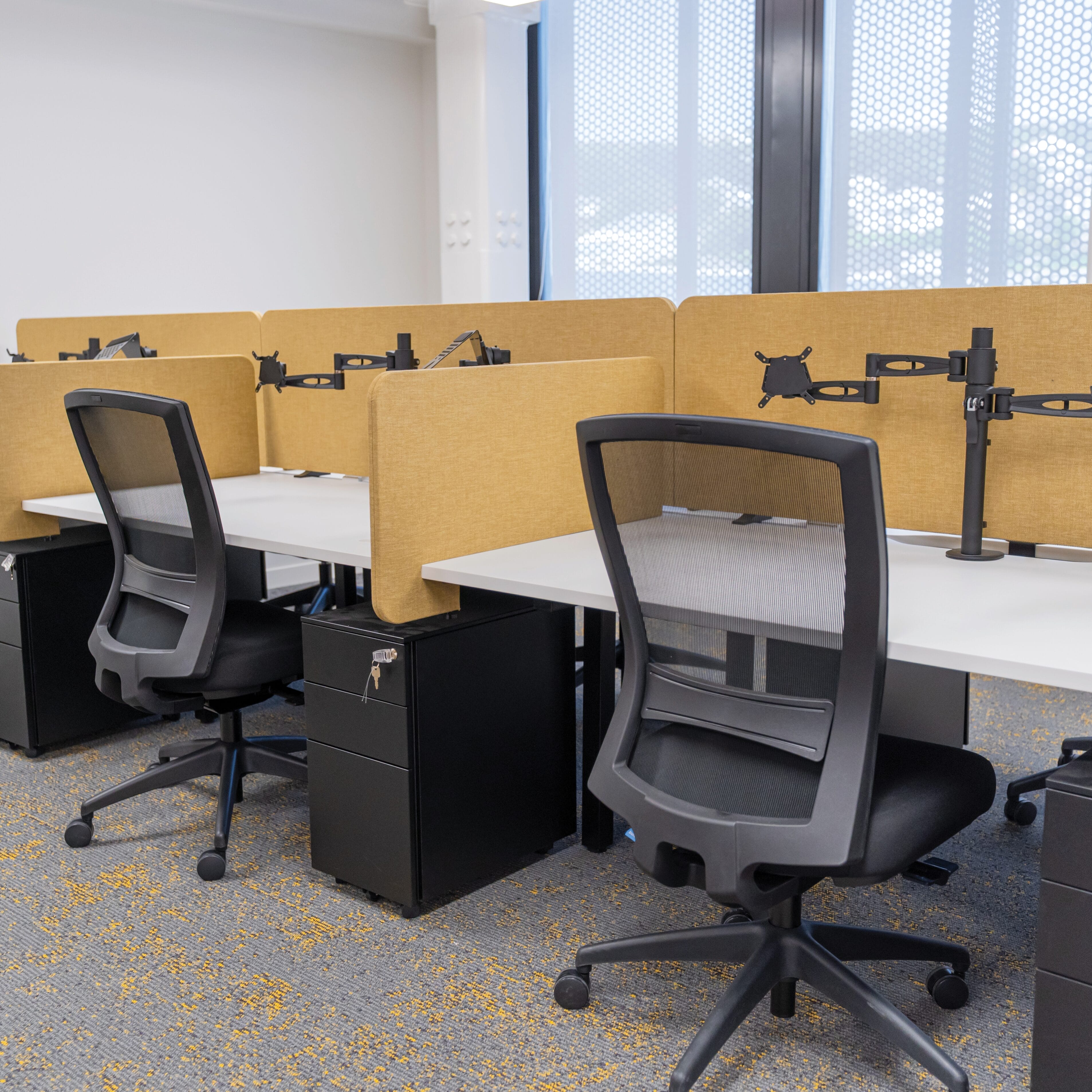
The Buro Mentor featured in Whakamaru: Wellington’s transformative community hub.
Beyond the task chair
Ergonomic thinking has expanded beyond the task chair. Organisations are increasingly considering comfort, posture and movement across the entire workplace ecosystem, from meeting rooms and collaboration spaces to breakout areas and standing-height workpoints.
For most of this history, better meant one thing: a nicer chair for one person at one desk. That changed in the last decade or so. Offices stopped being rows of matching workstations and turned into a mix of spaces, shaped by laptops and hybrid weeks that split your time between heads-down work and working with others. Seating had to keep up, moving out from behind the desk into softer, lighter pieces made for breakout corners and touchdown spots.
Modular systems like the Konfurb Arco Series can be set up as a quiet nook one week and an open lounge the next, then rearranged again when the space needs to change. Smaller pieces like the Konfurb Gem Ottoman can be pulled together for a quick catch-up and moved out of the way afterwards. For the first time, the office asks how you want to sit instead of assuming there's one answer.

The Konfurb Arco series modualr seating system.
What the story tells us about office chairs
Look back over two centuries and the same thread runs through it. The chair has always followed the way we work, from the first clerks bent over their ledgers to teams drifting between a desk and a shared table in a single afternoon. Right now that means seating made for movement and everyday comfort, not for sitting still.
If you're planning a workspace and want seating built for how people really work today, have a chat with a Buro reseller who can help match the right pieces to your space.


