If you spend most of your day seated, there’s a good chance your spine is working harder than you realise. Sitting isn’t inherently harmful, but how you sit can have a direct impact on your physical health and comfort.
Over time, slouching, leaning, or craning can place extra pressure on your lower back and neck. But sitting ramrod straight isn’t ideal either. So, what does correct sitting posture actually look like? It starts with understanding your spine’s natural curves.
Here’s Buro’s guide to sitting in a way that supports your spine
The shape of a healthy spine
To find the best sitting posture, it helps to know how a healthy spine actually looks and works.
Your spine isn’t meant to be perfectly straight. It has three natural curves:
- A gentle inward curve in the neck (cervical spine)
- A slight outward curve through the mid-back (thoracic spine)
- Another inward curve in the lower back (lumbar spine).
These curves work together to absorb shock, distribute weight, and keep your body balanced when you sit, stand, and move.
When these three curves are supported, the load on your spinal discs (the soft, cushioning pads between each vertebra) and joints is shared more evenly. But when you slump forward or lean heavily to one side, those curves either flatten or exaggerate. It may be subtle at first, but over time, this puts strain on certain areas, usually the lower back or neck.
What happens to your spine when you slouch
Slouching usually happens gradually, without you even realising you’re doing it. You slide forward in your desk chair, your shoulders start to round, your pelvis rolls backward, and your lower back starts to flatten. At the same time, your head moves forward, which can strain your neck and upper back.
Your spine is adaptable, so occasional slouching isn’t a problem. But when it becomes your default position for long periods, pressure builds, and spine health starts to suffer.

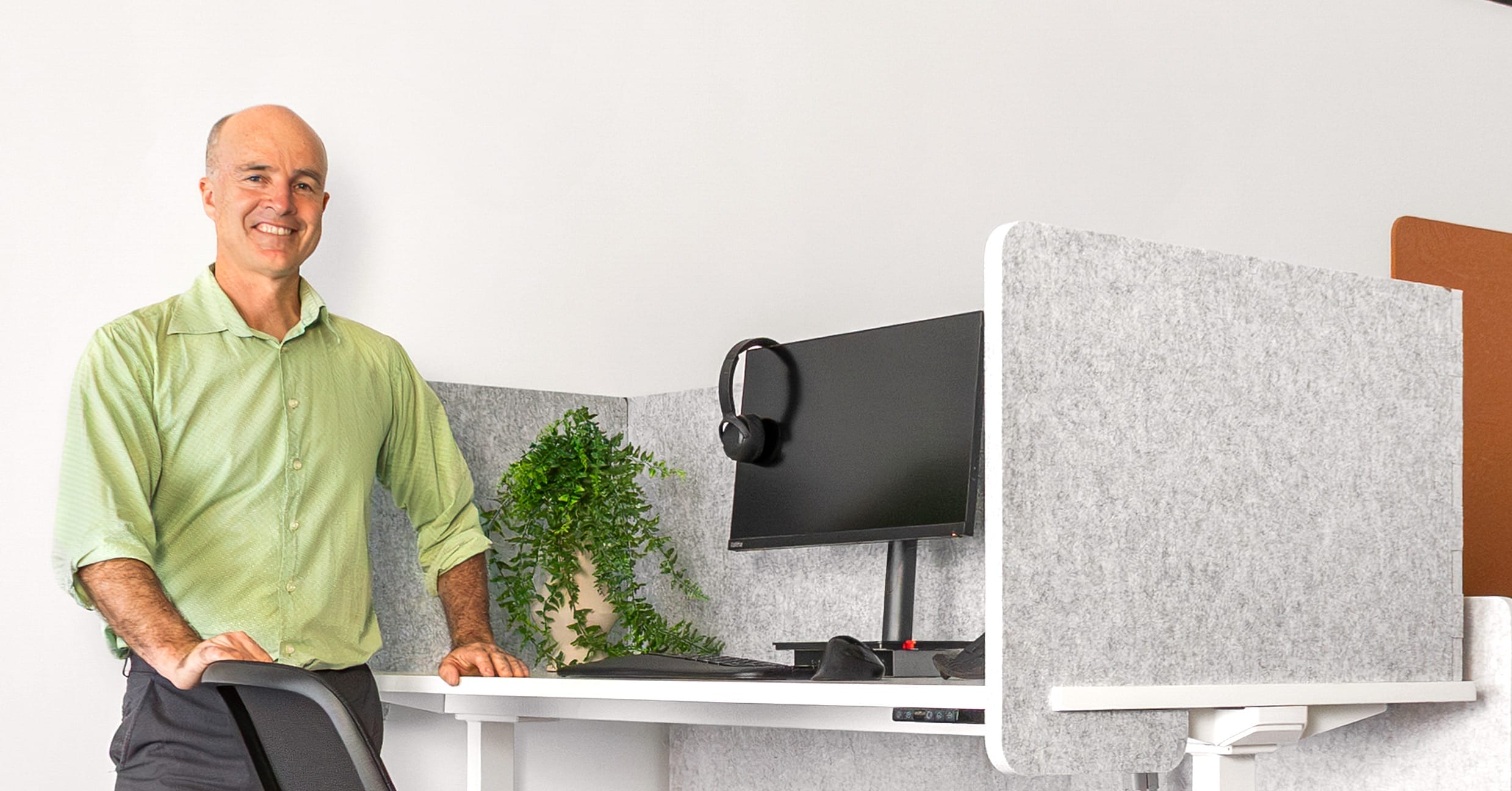
'Active sitting' stools like the Buro Polo (featured) are often recommended by physiotherapists to support better spine alignment.
The best sitting posture to support your spine
Correct sitting posture starts at the base of your spine and works upward. Try not to force yourself to sit rigidly straight – remember, your spine isn’t meant to be straight!
Here’s how to sit in a way that better supports your spinal health:
1. Start with your pelvic position
Sit all the way back in your chair so the backrest is touching your lower back. Make sure you’re not leaving a gap or perched forward. From there, sit on your “sit bones” (the bony part at the base of your pelvis) and keep your hips fairly neutral rather than rolling too far forward or backwards.
When your pelvis is in this position, the natural curve in your lower back can maintain itself more easily without strain.
2. Align the spine
Think of gently stacking your ribcage over your hips. Let your shoulders relax rather than rounding forward, but avoid pulling them back forcefully. The goal isn’t stiffness, it’s balance.
3. Use your head
Keep your ears roughly in line with your shoulders and gently tuck your chin so your head isn’t jutting forward. Your screen should be at eye level - this helps reduce the temptation to crane your neck forward throughout the day.
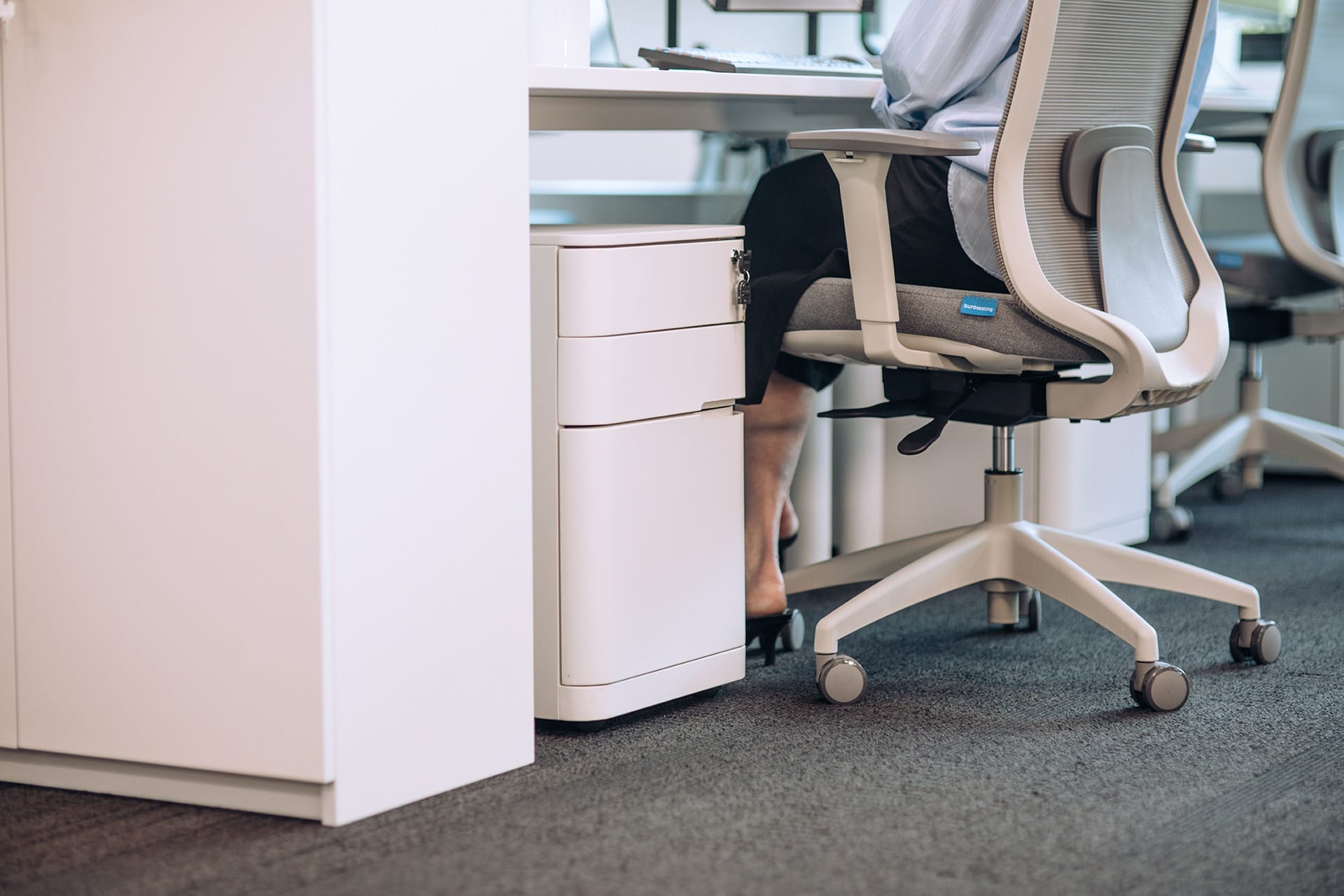
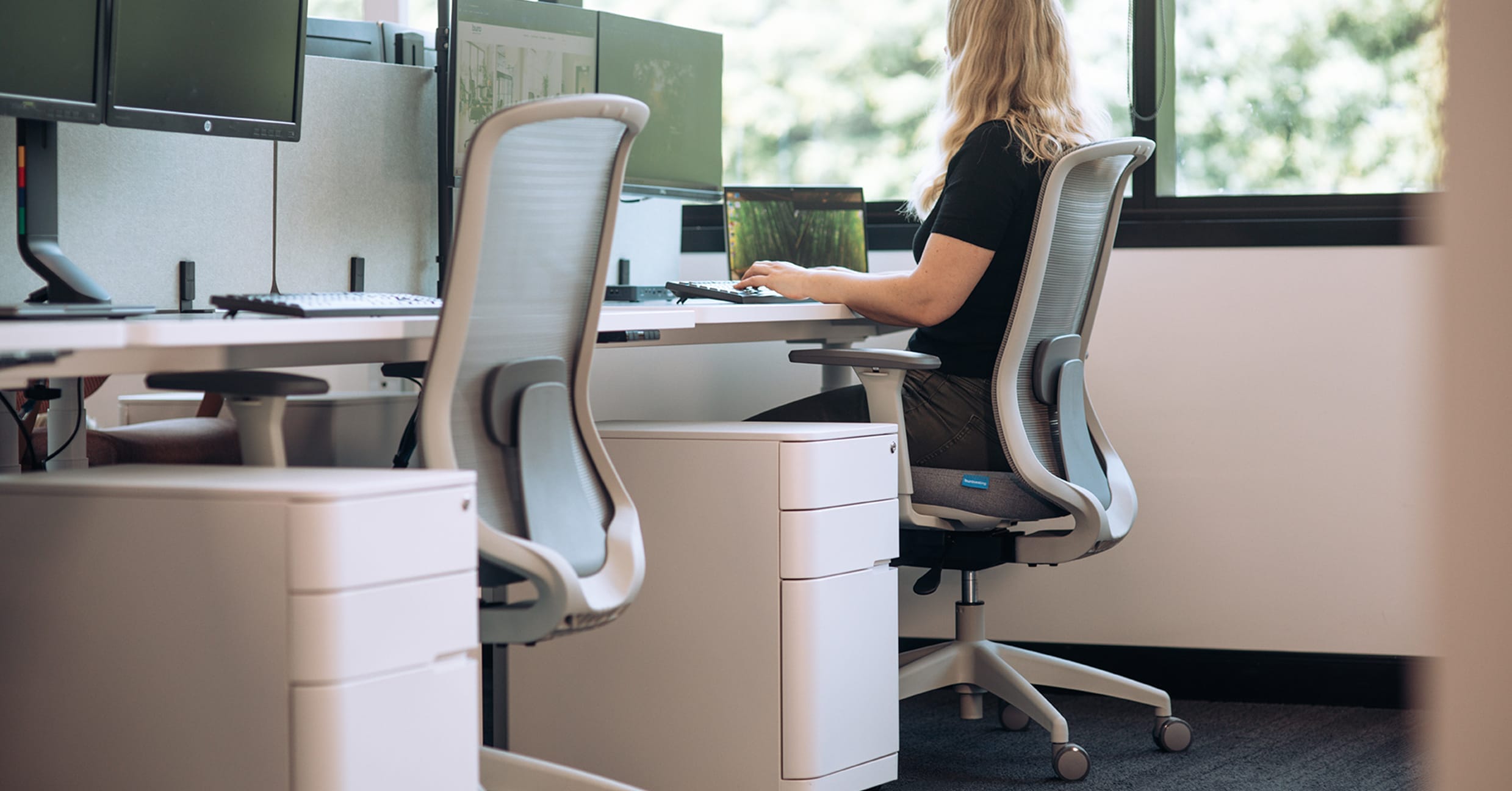
The Buro Elan chair features advanced ergonomics with optional arms and headrest for additional support.
How lumbar support protects the lower spine
Your lower back carries a lot of the load when you sit, which is why lumbar support is so important.
The lumbar support in our ergonomic chairs is designed to gently support the natural inward curve of your lower back. Instead of pushing you forward or creating an exaggerated arch, it helps you settle comfortably into the correct sitting posture without much conscious effort.
Core stability and spinal support
Hearing the words “engage your core” can feel a little intimidating, but it doesn’t need to. Forget six-pack abs: instead, think of lightly drawing your tummy in without holding your breath or tensing up.
When these core muscles are overly relaxed, it’s easy for your lower back to collapse. It might take some practice, but even a small amount of engagement through your middle can help maintain the natural curve in your spine while still allowing for movement.
Sitting duration and spinal load
Here’s the thing with the nine-to-five workday: our bodies are meant to move. That means, even with the best sitting posture and excellent lumbar support, sitting for long periods can still put pressure on your spine.
So, make sure you move. Shift slightly in your chair, adjust your posture, and take brief movement breaks regularly throughout the day. Your spine will thank you for it.
Protecting your spine during the workday
When it comes to spine health, small habits matter. The best sitting posture is one that works with your spine’s natural curves, keeps your body balanced, and lets you move regularly.
To find seating that supports healthy spinal alignment, connect with a Buro dealer for advice tailored to your workspace.